Alfalfa Meal Fertilizer 2.50-0-2.50
- Regular Price
- $ 21.99
- Sale Price
- $ 21.99
- Regular Price
- $ 18.99
Sold Out
- Unit Price
- per
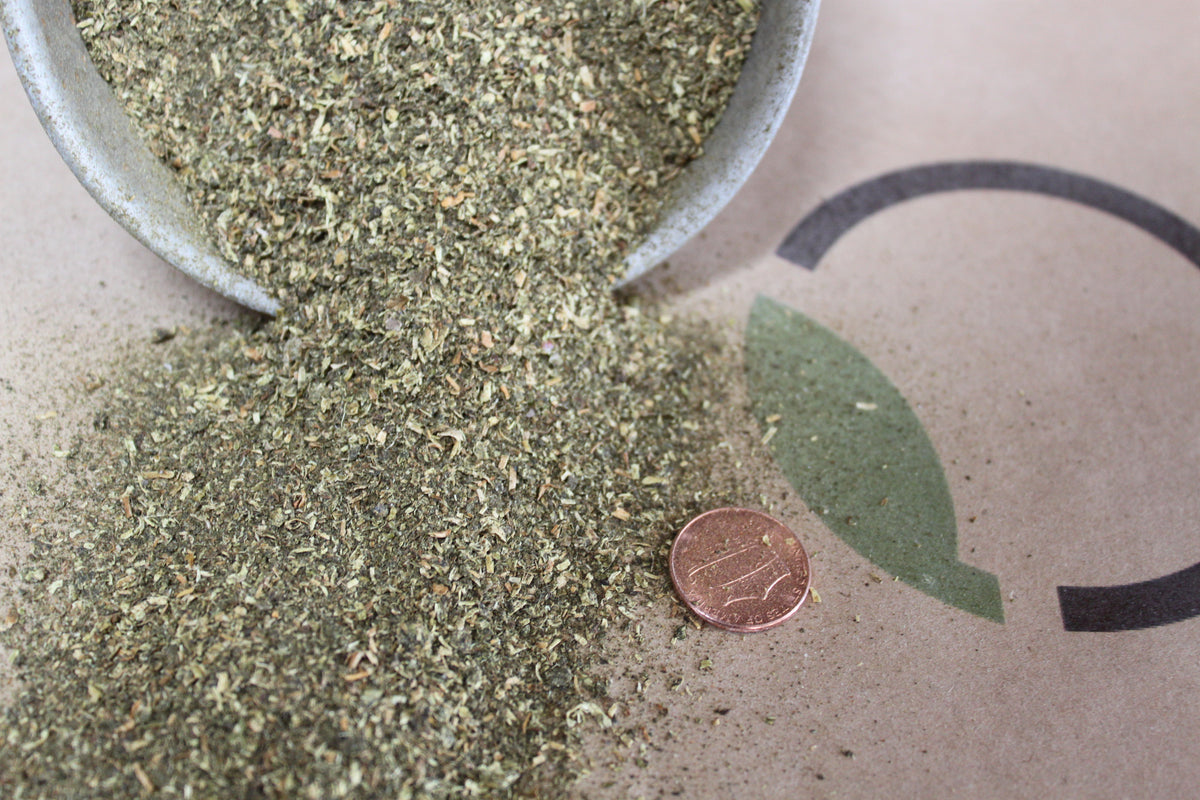




A finely ground, non-GMO organic amendment that feeds gently and slowly. Alfalfa meal supplies modest nitrogen and potassium, adds organic matter, and feeds the soil microbes that cycle nutrients to your plants — making it a long-favored choice for roses, garden beds, and compost. CDFA registered and independently lab tested for heavy metals.
Find your size → Calculate how much I need2.5%
Slow-release nitrogen from organic plant protein
2.5%
Soluble potash (K₂O) for vigor and stress tolerance
4–8wks
Nutrient release window as microbes break it down
35+yrs
Family-owned California fertilizer manufacturer
Coverage below assumes a standard pre-plant garden-bed rate of about 7.5 lb per 100 sq ft, worked into the top 3 inches of soil. Lighter maintenance rates stretch a bag further; heavier soil-building rates cover less. Alfalfa meal weighs roughly 2.5 cups per pound.
| Bag Size | Garden Bed Coverage | Approx. Volume | Best For |
|---|---|---|---|
| 2 lb | ~27 sq ft | ~5 cups | A few containers or one small bed |
| 4 lb | ~53 sq ft | ~10 cups | Most popular |
| 15 lb | ~200 sq ft | ~37 cups | Multiple beds and rose plantings |
| 40 lb | ~530 sq ft | ~100 cups | Best value |
Alfalfa meal is a pre-plant, incorporated soil amendment. It shines where the goal is steady feeding and long-term soil health — and it has real limits, which we have been upfront about below.
A long-standing favorite among rose growers. Worked into the soil around the drip line in early spring, it supplies gentle nitrogen and potassium plus organic matter.
Broadcast and incorporated before planting, it builds soil biology and releases nutrients slowly over 4–8 weeks. Best paired with a phosphorus source.
A nitrogen-rich "green" that helps heat a pile and speed decomposition. Mix 1–2 cups into each layer alongside carbon-rich browns.
Spread from the base to the drip line and worked into the surface as a slow, gentle organic feed that also builds soil structure.
Useful in potting mixes at 2–4 tbsp per gallon, but mix it in and let the media settle 1–2 weeks before adding sensitive transplants — decomposition generates heat.
Alfalfa meal has a near-neutral to slightly alkaline reaction. It is not recommended for blueberries, azaleas, or rhododendrons — use an acidic organic source instead.
Alfalfa meal earns its place through what it does for the soil over time — not through a quick nutrient spike. Here is the honest case for it.
Nitrogen and potassium become available gradually over roughly 4–8 weeks as soil microbes mineralize the meal — steady feeding without the flush-and-crash cycle of highly soluble fertilizers. Learn more in What's the Function of Nitrogen in Plants.
Because nutrients release slowly through microbial decomposition, alfalfa meal carries far less burn risk than soluble salts. It is not risk-free — high rates placed in direct contact with seeds or tender roots can cause damage — so incorporate it and water in, ideally 1–2 weeks ahead of planting.
Rather than bypassing soil biology, alfalfa meal feeds beneficial bacteria and fungi directly. Regular use can support microbial activity, nutrient cycling, and soil structure over time. See Soil Microbes and Plant Health.
Equal parts nitrogen and soluble potash (2.5-0-2.5) support both vegetative growth and plant vigor. Alfalfa contains no significant available phosphate — pair it with Bone Meal 3-15-0 for a complete organic program.
The whole dried alfalfa plant, finely ground, sourced from non-GMO alfalfa and processed in the United States. CDFA registered and independently lab tested for heavy metals, with results consistently well below required limits.
30carbon
Triacontanol — a 30-carbon fatty alcohol in alfalfa wax
Alfalfa meal's best-known feature is triacontanol, a long-chain fatty alcohol present in the plant's leaf wax. In controlled studies it has been examined for effects on photosynthetic rate, cell division, and root elongation. It is genuinely what sets alfalfa apart from other organic meals — no other common amendment contains it in meaningful amounts.
What the evidence does not support is a promise of a dramatic, visible response within days. University extension guidance notes that the growth-promotion effect at practical garden application rates is likely slight. The honest framing: triacontanol is a real and interesting compound, but alfalfa meal earns its keep mainly as a slow-release nutrient source and a soil conditioner.
The nutrient side is governed by mineralization. Alfalfa meal's nitrogen is locked in organic matter and must be converted to plant-available forms by soil microbes. A 52-week incubation study published in the Canadian Journal of Soil Science found nitrogen mineralization from alfalfa meal plateaued at roughly 34–53% of applied nitrogen — meaning only about a third to half of the listed nitrogen becomes available in the first season, and slowly. That is why alfalfa meal is best treated as a pre-plant, incorporated amendment rather than a quick side-dress feed.
For deeper coverage of how potassium supports plant vigor, see What's the Function of Potassium in Plants.
Rates below are drawn from university extension guidance and peer-reviewed research, compiled May 2026. Alfalfa meal is a pre-plant, incorporated amendment — work it in and water before planting. A current soil test is always the most reliable basis for a site-specific rate.
Quick answer: Work 5–10 lb per 100 sq ft into the top 3 inches of soil before planting.
| Use | Rate | Notes |
|---|---|---|
| Standard pre-plant, vegetable or flower bed | 5–10 lb per 100 sq ft | Work into top 3 in.; incorporate 1–2 weeks before planting |
| Maintenance, beds already in good fertility | 2–5 lb per 100 sq ft | Lighter top-up between crops |
| Trees & shrubs | Up to 1 lb per 2 in. of trunk diameter | Spread base to drip line; work into surface |
📋 Soil Test First: Garden application rates above are general guidelines based on typical soil fertility and home-garden goals. Actual rates should be confirmed by a current soil test and consultation with your local cooperative extension service, as needs vary by soil type, crop, and region.
Quick answer: Work 0.5–1 cup per established bush into the soil surface around the drip line in early spring.
| Situation | Rate | Notes |
|---|---|---|
| Established rose or flowering shrub | 0.5–1 cup per plant | Work into surface around drip line, early spring |
| New rose planting | 0.5–1 cup mixed into backfill | Blend through the backfill soil before setting the plant |
Note: The University of Maine Cooperative Extension confirms alfalfa meal is appropriate for flower beds but notes that the triacontanol growth-promotion effect is likely slight at garden application rates. Treat alfalfa meal as a steady, soil-building feed rather than a fast bloom booster.
Quick answer: Broadcast roughly 10–20 lb per 1,000 sq ft and water in well.
| Lawn Condition | Rate | Notes |
|---|---|---|
| Light feed / healthy turf | 10 lb per 1,000 sq ft | Apply when soil is above 55°F |
| Standard feed | 15 lb per 1,000 sq ft | Water in thoroughly after spreading |
| Higher rate / thin turf | 20 lb per 1,000 sq ft | Rake in lightly; avoid leaving meal on the surface |
Note: Start at the lighter rate and adjust to your turf. Apply when soil is consistently above 55°F so microbes are active, and water in well. A current soil test remains the most reliable basis for a site-specific rate.
Quick answer: Mix 2–4 tbsp per gallon of potting media, or add 1–2 cups per compost pile layer.
| Use | Rate | Notes |
|---|---|---|
| Potting mix, incorporated | 2–4 tbsp per gallon of mix | Roughly 5 lb per cubic yard of mix |
| Compost activator | 1–2 cups per pile layer | Nitrogen-rich "green"; balance with carbon browns |
Note: Alfalfa meal decomposition is exothermic and fast in a confined potting mix. Mix it in thoroughly and let the media settle 1–2 weeks before setting in sensitive transplants, to avoid heat or salt stress on tender roots.
Quick answer: Broadcast and incorporate at roughly 800 lb per acre.
| Use | Rate | Source | Notes |
|---|---|---|---|
| Broadcast & incorporated, medium soils | ~800 lb per acre | Fedco Seeds / MOFGA-aligned guidance | Supplies ~20 lb/acre available N at ~40% first-season availability |
| Lighter / higher adjustments | 600–1,000 lb per acre | Fedco Seeds / MOFGA-aligned guidance | Adjust per soil test and crop nitrogen demand |
📋 Soil Test First: Field application rates above are general guidelines based on typical soil test levels and crop removal estimates. Actual rates should be confirmed by a current soil test and consultation with your local cooperative extension service. At 2.5% nitrogen and roughly 34–53% first-season mineralization, alfalfa meal supplies a modest nitrogen starter — it is a soil-building amendment, not a sole nitrogen source for heavy feeders.
Sources: Fedco Seeds (Maine state lab analysis) and MOFGA-aligned organic guidance; nitrogen mineralization data from a 52-week incubation study, Canadian Journal of Soil Science.
Alfalfa meal rewards a little patience. Apply ahead of planting, give the microbes time, and use the calculator to size your order to the bag.
Use the Application Rates above or the calculator to find your amount. For garden beds, plan on roughly 5–10 lb per 100 sq ft as a pre-plant rate.
Spread evenly over the soil surface, then work it into the top 2–4 inches with a fork or rake. Incorporating it reduces surface mold and speeds breakdown.
Water thoroughly to activate microbial breakdown. Where practical, incorporate 1–2 weeks before planting so decomposition settles before tender roots go in.
Because nitrogen releases slowly, alfalfa meal is a poor choice for fixing a deficiency fast. For an immediate boost, pair it with a faster nitrogen source rather than relying on meal alone.
Organic meals are not interchangeable — each carries a different nutrient profile and release speed. For a broader look, see Organic vs Synthetic Fertilizer.
| Product | NPK | Release Speed | Best For | Notes |
|---|---|---|---|---|
| Organic Alfalfa Meal (this product) | 2.5-0-2.5 | Slow | Roses, bed prep, compost, soil building | Contains triacontanol; near-neutral to slightly alkaline |
| Bone Meal | 3-15-0 | Slow | Root development, flowering, transplanting | The phosphate source alfalfa meal lacks |
| Blood Meal | 13-0-0 | Fast (for an organic) | Heavy nitrogen feeders, leafy greens | Much higher nitrogen; stronger odor |
| Feather Meal | 12-0-0 | Very slow | Long-season nitrogen, 3–4 month feed | Economical sustained nitrogen only |
| Kelp Meal | 2-0-4 | Slow | Trace minerals, biostimulant support | 60+ trace minerals; not a primary nutrient source |
Alfalfa meal is an excellent fit for some jobs and the wrong tool for others. Here is an honest split.
Alfalfa meal supplies nitrogen, potassium, and organic matter. Pair it with a phosphate source and trace minerals for full coverage.
Adds the available phosphate alfalfa meal lacks — supports root development, flowering, and fruit set.
Trace mineralsAdds 60+ trace minerals and natural biostimulant compounds for stress resistance and root health.
MagnesiumMagnesium sulfate supports chlorophyll production — a common companion for roses alongside alfalfa meal.
Soil calciumAdds calcium and sulfur without changing soil pH; improves clay soil structure and root penetration.
Alfalfa meal is a low-risk natural plant material, but dust, storage, and placement still warrant a little care.
If your question isn't here, contact our team at questions@greenwaybiotech.com.
Alfalfa meal is a slow-release amendment, not a quick feed. Nutrients become available gradually over roughly 4–8 weeks as soil microbes break down the organic matter, and research shows only about a third to half of the listed nitrogen becomes plant-available in the first season. Results vary with soil temperature, moisture, and microbial activity. If you need a fast response, pair it with a faster nitrogen source.
Triacontanol is a 30-carbon fatty alcohol found in alfalfa's leaf wax that has been studied for effects on photosynthesis, cell division, and root growth. It is what makes alfalfa distinct among organic meals. That said, university extension guidance notes the growth-promotion effect is likely slight at practical garden application rates — so it is best to think of alfalfa meal as a slow-release nutrient source and soil conditioner rather than a dramatic growth stimulant.
Alfalfa naturally contains very little phosphorus, so the registered analysis shows 0 for available phosphate (P₂O₅). If your soil test indicates a phosphorus need, pair alfalfa meal with Bone Meal 3-15-0 or Fish Bone Meal 4-17-0 for complete coverage.
Alfalfa meal is a gentle organic amendment suitable for most vegetables, flowers, trees, and shrubs, and is a long-standing favorite for roses. It is not suited to acid-loving plants such as blueberries, azaleas, and rhododendrons, because its reaction is near-neutral to slightly alkaline. To see how it fits a broader edible garden program, read the Best Fertilizer for Vegetable Garden guide.
At recommended rates, burn risk is low because nutrients release slowly through microbial decomposition rather than as soluble salts. It is not entirely risk-free — decomposition generates heat, and high rates in direct contact with seeds or tender roots can cause damage. Incorporate the meal, water it in, and where practical apply 1–2 weeks before planting.
Synthetic fertilizers deliver a quick, predictable nutrient spike; alfalfa meal feeds slowly over weeks and adds organic matter that feeds soil microbes. Neither is universally better — it depends on your goal. For a fast deficiency fix, a soluble fertilizer is more practical; for long-term soil health, alfalfa meal contributes in ways soluble salts do not. For a deeper comparison, read Organic vs Synthetic Fertilizer.
Yes. Many gardeners steep alfalfa meal in water to make a liquid feed: add about 1 cup of meal to 5 gallons of water, let it steep 24–48 hours stirring occasionally, strain, and apply to the soil. Use it within a few days, as the tea will begin to ferment. Test on a small area first if applying to sensitive plants.
In warm, humid conditions you may see a harmless white or gray mold on alfalfa meal left on the soil surface — a sign of microbial activity. To minimize it, work the meal into the top few inches of soil and water in after application.
Alfalfa meal adds organic matter that can improve soil structure and water retention, and it feeds beneficial bacteria and fungi that drive nutrient cycling. Regular use can build healthier, more productive soil over time. Learn more about the role of soil biology in Soil Microbes and Plant Health.
Yes. Our Organic Alfalfa Meal is independently lab tested for heavy metal content, with results consistently well below required limits. It is sourced from non-GMO alfalfa, manufactured in the USA, and registered with the California Department of Food and Agriculture (CDFA).
Organic Alfalfa Meal 2.5-0-2.5 ships in 2, 4, 15, and 40 lb bags, with free shipping on orders over $100. Backed by our 90-day money-back guarantee — if it isn't right for your garden, return the unused portion for a full refund.
Choose your size →